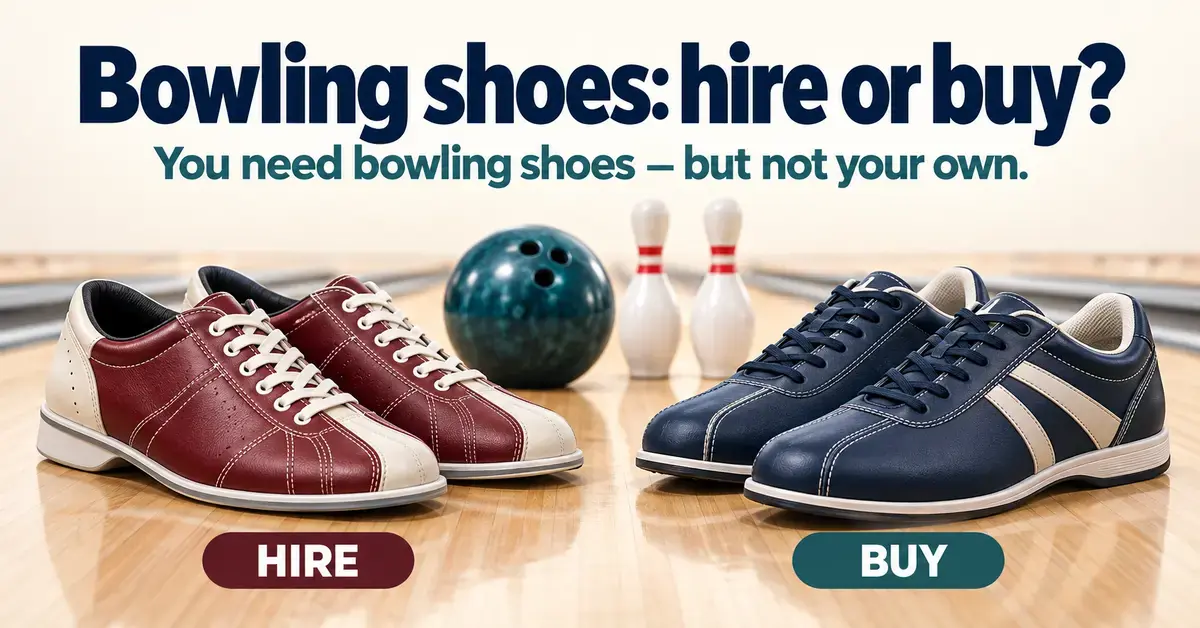
The short answer is no—you do not need to own your own bowling shoes to go ten-pin bowling. Every centre in New Zealand hires shoes out, and at most of them the hire fee is already built into the price of your game. What you cannot do is bowl in your street shoes: the sport genuinely requires purpose-made footwear on the approach. This guide explains why bowling shoes exist, what makes them different from ordinary sneakers, what hire actually costs in New Zealand, and the point at which buying your own pair starts to make sense.
It also clears up a common mix-up. On a New Zealand bowling site you will see the word “bowling” used for two completely different sports—ten-pin bowling indoors and lawn bowls outdoors. Their shoes are not the same, are not interchangeable, and are covered separately below.
Key Points
- You need bowling shoes, but not your own. Every NZ ten-pin centre hires them out.
- Hire is usually included in the game price at major NZ centres—not a separate fee.
- Why they exist: a smooth slide sole lets you glide safely and protects the lane approach.
- Two shoe types: athletic-style (slide sole on both feet, great for beginners) and performance-style (dedicated slide and braking soles).
- Buy your own if you bowl regularly or in a league—for fit, hygiene and a consistent slide, not just to save on hire.
- Different sport, different shoe: lawn bowls needs flat, heel-less shoes and is not interchangeable with ten-pin footwear.
Do you have to buy your own bowling shoes?
No. For casual and even regular social bowling, hiring is perfectly normal and expected. Ten-pin centres keep racks of hire shoes in every size precisely so that walk-in customers never need to bring anything. You swap your own shoes for a hire pair at the counter, bowl, and swap back on the way out.
The rule you cannot get around is the footwear itself. You are not allowed to walk onto the approach—the polished timber or synthetic runway you slide along before releasing the ball—in the shoes you arrived in. So the real choice is not “shoes or no shoes”; it is “hire a pair” versus “bring your own approved pair”. Buying only becomes worthwhile once you bowl often enough that fit, hygiene and consistency start to matter, which we cover further down.
Why do bowling alleys make you wear bowling shoes?
Bowling shoes exist to let you slide safely and to protect the lane surface—two things ordinary shoes actively work against. There are three reasons every centre insists on them.
They let you slide instead of stopping dead
A bowling delivery ends with your back foot sliding forward as you release the ball. Bowling shoes are built with a smooth, low-friction sole on at least one foot so that slide happens cleanly and predictably. Everyday trainers do the opposite: their grippy rubber soles are designed to stop you. Plant a rubber sole mid-slide and you can turn an ankle or throw the ball wildly—exactly the injuries bowling shoes are designed to prevent.
They protect the approach
The approach is a finely maintained, precisely conditioned surface. Outdoor soles track in grit, water and dirt that scratch it and ruin the consistent slide every bowler relies on. Dedicated indoor-only shoes keep that surface clean and even, which is why staff will ask you to change even if your own trainers happen to have smooth soles.
They keep things hygienic and fair
Hire shoes are disinfected between users, and requiring them means everyone is on the same footing—no one gains an advantage or damages the lane with unsuitable footwear. It is a simple, enforceable standard that keeps the venue running smoothly.
What makes a bowling shoe different from a sneaker?
A bowling shoe is engineered around one idea: glide with one foot, brake with the other. That single design goal is what separates it from any sneaker in your wardrobe.
The slide sole and the braking sole
On a performance bowling shoe, the two feet do different jobs. One shoe carries a smooth slide sole that lets you glide into the release; the other carries a grippier traction (braking) sole that pushes you off and helps you stop under control. For a right-handed bowler the slide is on the left foot and the brake on the right; for a left-hander it is reversed. Sneakers cannot do this because both shoes grip.
Athletic style versus performance style
Bowling shoes come in two broad categories. Athletic-style shoes look like ordinary trainers and have the same universal slide sole on both feet. They are ideal for beginners, occasional bowlers and anyone who bowls about once a week or less, because you do not have to worry about which foot slides. Nearly all hire shoes are athletic-style. Performance-style shoes have a dedicated slide sole on one foot and a traction sole on the other, giving a serious bowler far more control over their slide and stop.
Interchangeable soles and heels
Higher-end performance shoes (such as Dexter’s SST and Brunswick’s top ranges) let you swap the slide sole and sometimes the heel using hook-and-loop pads. Higher-numbered soles slide more, lower-numbered soles grip more, and the heel fine-tunes your stopping power. This lets a committed league bowler match their footwear to changing lane conditions—a level of adjustment that is pointless for casual play but valuable if you bowl competitively. If any of that sounds like your goals, our overview of ten-pin bowling in New Zealand is a good place to see how the sport is organised here.
How much does it cost to hire bowling shoes in New Zealand?
At most major New Zealand ten-pin centres, shoe hire is included in the price of your game rather than charged separately. This is an important difference from many overseas alleys, where a $3–$6 separate hire fee is normal and where “buy your own to skip the fee” is common advice. In New Zealand that maths often does not apply, because you are already paying one bundled price.
Verified examples of current game pricing (which includes shoe hire) at NZ centres:
- Superstrike (Hastings): adults $16 for one game, $25 for two, $32 for three; kids up to 13 and seniors $14/$20/$26—shoe hire included.
- PINS Tenpin Bowling: adults $15.50 for one game, $25 for two, $32 for three—shoe hire included.
- Bowlarama (New Plymouth): adults $15 for one game, $24 for two, $29 for three, with bowling shoes required.
Prices vary by centre, day and session (peak evenings and weekends cost more than off-peak), so always check the venue’s own page before you go. The takeaway is that in New Zealand you rarely pay a stand-alone hire fee, which changes the buy-versus-hire decision. If you are planning a night out, our city guides such as bowling in Auckland list local centres and what to expect.
When does buying your own bowling shoes pay off?
Buying pays off when you bowl often enough that consistency, fit and hygiene outweigh the convenience of hiring—not simply to dodge a hire fee. Because most NZ centres bundle hire into the game price, the New Zealand case for buying rests on performance and comfort rather than pure savings.
Owning your own pair makes sense if you:
- Bowl regularly or in a league. If you play weekly or join a ten-pin travel league, a consistent slide from a pair broken in to your own feet is a real advantage. Hire shoes wear unevenly, so two pairs from the same rack can feel completely different.
- Want a reliable, repeatable slide. Your own shoes give the same glide and braking every visit, which helps you groove a consistent delivery and can reduce strain on knees and hips over time.
- Prefer your own footwear for hygiene or fit. Some bowlers simply do not like shared shoes, or need a specific size or width that hire racks do not stock well.
Hiring remains the smarter choice if you bowl only a few times a year, bowl with changing group sizes, or are still deciding whether the sport is for you. There is no benefit to buying shoes that sit in a cupboard for eleven months.
How to choose bowling shoes if you decide to buy
If you do buy, match the shoe to how you play rather than to the flashiest model. A few practical pointers:
- Start with athletic-style if you are still learning. A slide sole on both feet is forgiving and works whether you release right- or left-handed. As a rough guide, entry-level pairs in New Zealand tend to sit in the low-to-mid hundreds of dollars, while performance shoes with interchangeable parts cost considerably more.
- Choose performance-style only if you bowl seriously. Dedicated slide and traction soles, and swappable pads, are worth it for league and tournament players and wasted on casual bowlers.
- Get the size right. Bowling shoes should fit snugly like an athletic shoe—too loose and your slide becomes unpredictable.
- Keep them indoor-only. Never wear bowling shoes outside; grit on the slide sole ruins both the sole and your slide, and centres may refuse shoes that have clearly been worn outdoors.
- Buy shoe covers. A cheap pair of slip-on covers lets you visit the snack bar or restroom without contaminating your slide sole.
Rent vs Buy Comparison
| Factor | Hiring shoes | Buying your own |
|---|---|---|
| Upfront cost | None (usually included in the game price in NZ) | Entry-level pairs from the low hundreds of dollars; performance shoes cost more |
| Best for | Casual and occasional bowlers, groups, first-timers | Regular, weekly or league bowlers |
| Consistency | Variable—soles wear unevenly between pairs | Same slide and brake every visit |
| Fit & comfort | Limited to what’s on the rack | Chosen to fit your feet |
| Hygiene | Shared but disinfected; socks required | Yours alone |
| Maintenance | None | Keep indoor-only; use shoe covers |
| Convenience | Nothing to carry or store | Must bring and store your pair |
Are lawn bowls shoes the same as ten-pin bowling shoes?
No—lawn bowls shoes are a completely separate category and cannot be swapped with ten-pin shoes. Lawn bowls is played outdoors on a fine grass or synthetic green, and the footwear rule is about protecting that green, not about sliding.
Bowls New Zealand regulations require players, umpires and markers to wear flat-soled, heel-less footwear on the green. The sole may be a non-slip material with a slightly abrasive surface, but it must have no raised or attached heel and no pronounced ripples or ridges that could mark the turf. Bowls New Zealand can approve specific footwear on application, and can grant dispensation on medical grounds. Specialist lawn bowls shoes (brands such as Asics make dedicated models) meet these criteria; ten-pin slide soles do not and would never be allowed on a green.
So if you are heading to a green rather than an alley, you need flat-soled bowls shoes, not the sliding shoes described above. Clubs like those featured in our Auckland lawn bowls guide can advise newcomers on approved footwear, and many have loan pairs or relaxed rules for first-time visitors.
Common mistakes people make with bowling shoes
Most footwear problems at the alley come from a handful of avoidable mistakes:
- Trying to bowl in street shoes. Even smooth-soled sneakers are refused because they lack a proper slide sole and track in dirt. Change into bowling shoes—it is not optional.
- Assuming socks are provided. You must wear socks with hire shoes for hygiene; most centres will not let you hire barefoot, and few give socks away free. Bring a pair.
- Buying performance shoes as a beginner. Interchangeable soles and a dedicated sliding foot are wasted (and confusing) if you bowl a few times a year. Start athletic-style.
- Wearing bowling shoes to the restroom or outside. Water and grit on the slide sole wreck your glide instantly. Use shoe covers.
- Confusing the two sports’ shoes. Ten-pin slide shoes are useless—and not permitted—on a lawn bowls green, and flat bowls shoes will not slide on an approach.
- Buying to “save on hire” in New Zealand. Because most NZ centres include hire in the game price, buy for fit and consistency, not to avoid a fee that you often are not charged separately anyway.
Sources
- Superstrike Tenpin Bowling (Hastings) — Pricing (shoe hire included)
- PINS Tenpin Bowling — pricing and shoe hire
- Bowlarama New Plymouth — Ten Pin Bowling pricing
- AMF — Bowling Shoes 101: renting vs owning and what to buy
- Bowling.com Knowledge Hub — interchangeable soles and heels explained
- Bowling.com Knowledge Hub — athletic vs performance shoes by bowler type
- Bowls New Zealand — Regulations (footwear on the green), October 2024
Frequently Asked Questions (FAQ)
Do I need to bring my own bowling shoes to a bowling alley?
No. Every ten-pin centre in New Zealand hires shoes in all sizes, and at most centres the hire fee is already included in the price of your game. You only need your own pair if you bowl often and want a consistent, well-fitting shoe.
Why can’t I just bowl in my normal sneakers?
Sneakers have grippy rubber soles that stop you dead, whereas bowling requires a smooth slide sole so your back foot can glide during the release. Street shoes also track dirt and moisture onto the approach, damaging the carefully conditioned surface, so centres require proper bowling shoes.
How much does it cost to hire bowling shoes in New Zealand?
At most major NZ centres shoe hire is bundled into the game price rather than charged separately, with adult games commonly around $15–$16 each. This differs from many overseas alleys that add a separate $3–$6 hire fee, so always check the specific centre’s pricing.
Is it worth buying my own bowling shoes?
It is worth it if you bowl regularly or in a league, want a consistent slide, or prefer your own footwear for fit and hygiene. If you only bowl a few times a year it is not worth it, especially in New Zealand where hire is usually included in the game price.
Are lawn bowls shoes the same as ten-pin bowling shoes?
No. Lawn bowls requires flat-soled, heel-less shoes to protect the grass green, as set out in Bowls New Zealand regulations, while ten-pin shoes have a sliding sole for the approach. The two are not interchangeable and each is only allowed in its own sport.
