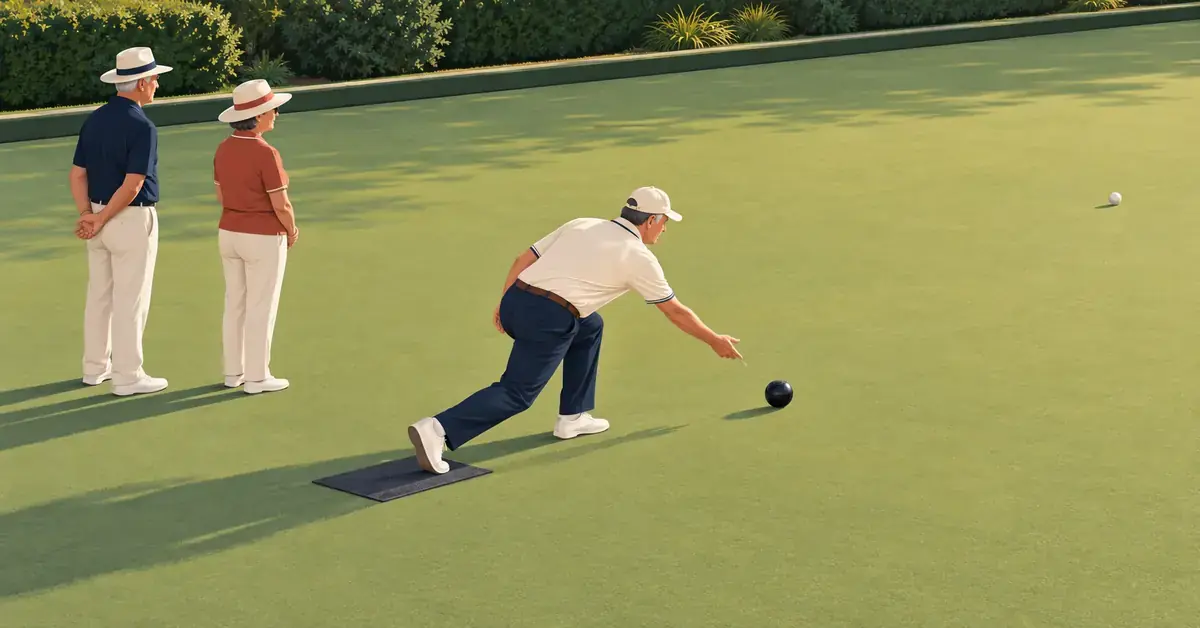
Lawn bowls etiquette is the set of unwritten courtesies that keep a game fair, safe and enjoyable for everyone on the green. Most of it is not written into the Laws of the sport at all — it is simply how considerate bowlers behave: staying still while someone delivers, keeping out of a player’s eyeline, looking after the green and acknowledging a good shot whoever plays it. For newcomers the etiquette can feel more intimidating than the rules, because nobody hands you a list. This guide explains the courtesies clearly, shows where they come from, and gives you the confidence to step onto the green knowing exactly what is expected.
Key Points
- Etiquette vs the Laws: etiquette is the unwritten courtesy that runs alongside the formal Laws of the Sport of Bowls, not a separate rulebook.
- Possession of the rink (Law 13) is the idea behind most of it: the side whose bowl is being played controls the rink until that bowl stops.
- Stay still and quiet while anyone delivers, at both ends of the rink and on neighbouring rinks.
- Stand out of the way: behind the mat at one end, behind the jack and away from the head at the other — and never where your shadow crosses the jack.
- Look after the green: flat-soled shoes, never drop or throw your bowls, keep off the banks and ditch edges.
- Be a good sport: acknowledge good shots, don’t criticise the green or your team-mates, and accept the result gracefully.
What does “lawn bowls etiquette” actually mean?
Etiquette is the code of good manners that runs alongside the formal rules, not the rules themselves. The Laws of the Sport of Bowls — published by World Bowls and used in New Zealand — set out what you must and must not do: where to stand, when you may deliver, how touchers are marked. Etiquette covers the grey areas the Laws leave open: how quietly to stand, where to put your eyes, whether to chase your bowl up the green. Breaking a Law can cost you the shot or the end; breaking etiquette just marks you as someone who has not learned the game’s customs yet.
The two overlap. Some courtesies, such as not walking in front of a player who is about to bowl, are both bad manners and a breach of the Law on possession of the rink. That single idea — possession of the rink — sits behind most of the unwritten rules, so it is worth understanding first. If you are still learning the basics of play, our guides to the rules of lawn bowls and how to play lawn bowls cover the mechanics this article assumes.
Possession of the rink: the one idea behind most etiquette
Possession of the rink belongs to the player or team whose bowl is being played, and it is the single rule that explains most on-green behaviour. It is set out in Law 13 of the Laws of the Sport of Bowls (Crystal Mark Fourth Edition, in force in New Zealand since 1 April 2023). Once you grasp who “owns” the rink at any moment, almost every courtesy follows naturally.
Who holds possession, and when it changes
Possession passes to the opposing side the moment the delivered bowl comes to rest. In practice that means the side about to bowl controls the mat and the head; the other side should stand back and out of the way until the bowl stops. When your bowl finishes, control transfers to your opponents, and it is now their turn to be given space and quiet. A short pause is allowed at the head after each bowl so that any touchers — bowls that have touched the jack — can be marked.
Don’t bowl before the previous bowl has stopped
A player must not deliver a bowl until the previous bowl has come to rest and possession has transferred, under Law 13.3 (relocated in the Fourth Edition from the former Law 11.2.2). Rushing your shot while an opponent’s bowl is still running is both a breach of the Law and poor manners. Wait, let the bowl settle, let any marking happen, and then take the mat.
If you follow your bowl up the green
A player who walks up behind their bowl must be behind the jack by the time the bowl stops, so they do not end up standing in the head while the opposition takes possession. Many clubs regard chasing your bowl all the way up the rink as poor etiquette even when it is legal — it can distract the next bowler and crowd the head. If you do go up, move promptly down the centre of the rink and take your place behind the jack.
Where to stand — and how to stay out of the way
Knowing where to stand is the courtesy beginners get wrong most often, and it comes straight from possession of the rink. The guiding principle is simple: when it is not your turn, make yourself invisible to the bowler on the mat.
At the mat end
Stand still and behind the mat when a team-mate or opponent is about to deliver. Club etiquette guides commonly suggest standing at least a metre back so you are clearly out of the way; some associations ask for more. Step onto the mat only when possession is yours, approach it from behind, and after delivering move off so the next player can take position. Do not stand beside or just behind someone on the mat where you might distract them.
At the head end
Players at the head who are not directing play should stand behind the jack and away from the head. That keeps the centre line clear for the bowler to aim along and stops you blocking the view of the jack or the markers. Only the player controlling the shot — usually the skip — stands at the head giving directions; everyone else waits quietly behind, ready to help judge the result once the end is finished.
Mind your shadow on the jack
Do not stand where your shadow falls across the jack or the head, because it makes the target hard to see from the mat. This matters most in the low sun of a New Zealand summer evening, when a long shadow can fall right down the rink. A white jack is already hard to pick out against white shoes or trousers, so stand well behind it and off to the side rather than directly over it.
Keeping still and quiet while others bowl
Silence and stillness during a delivery are the heart of bowls etiquette. When a player steps onto the mat, everyone at both ends should stop moving and stop talking until the bowl is on its way. Movement at the far end is especially distracting, because it catches the bowler’s eye exactly where they are trying to focus. Finish your conversation before someone takes the mat, keep mobile phones silenced, and save your reaction to a shot until the bowl has come to rest.
This courtesy extends to spectators and to neighbouring rinks. If you are watching, stand still behind the players and keep your voice down. If you need to retrieve a bowl that has strayed from an adjacent rink, wait until that rink’s bowler has delivered before you move.
Before you step onto the green
Good etiquette starts before the first bowl is rolled, with punctuality, the right gear and the right footwear. Arriving ready saves everyone time and sets a considerate tone for the game.
Be on time and bring your gear
Turn up early enough to be ready at the scheduled start, because keeping opponents waiting is one of the clearest discourtesies in the sport. Bring the small things you will need during play — chalk for marking touchers and a measure for close heads — so the game is not held up while you hunt for them. If you are new and borrowing club bowls, check you have the right size; our guide to what size lawn bowls you need explains how to choose.
Dress and footwear
Wear flat-soled shoes that will not damage the green, and follow whatever dress standard the game calls for. Smooth, flat-soled footwear is the one near-universal rule because heels and ridged soles mark and tear the playing surface. Beyond that, club social play is usually relaxed, while club competitions and representative games often call for whites or club colours. Our guide to the lawn bowls dress code and shoes covers exactly what to wear and when.
Looking after the green
Protecting the playing surface is a shared responsibility and a core part of etiquette. A good green takes a lot of work to maintain, and careless habits undo it quickly. Keep these simple courtesies in mind:
- Never drop or throw your bowls onto the green — place them down gently, and carry them on when you change ends rather than rolling them across.
- Do not stand on the green banks or the ditch edges (the “plinth”), which are fragile and easily crumbled.
- Keep food and drink off the surface. Do not tip water, coffee or anything else onto the green.
- Take rubbish with you and leave the rink clear for the next game.
Criticising the green is its own small discourtesy. Every bowler on it faces the same surface, so blaming the rink for a poor bowl is frowned upon.
Good sportsmanship on the green
Lawn bowls has a strong tradition of courtesy to opponents, and sportsmanship is what most players mean by “the spirit of the game”. It costs nothing and is noticed immediately.
- Acknowledge good shots — from your own side and your opponents’ — with a quiet “good bowl”.
- Be honest about luck. If a lucky deflection goes your way, a modest acknowledgement is better than celebration; do not gloat over a wick or a fluke.
- Don’t criticise team-mates. Nobody plays a bad bowl on purpose, and encouragement gets more out of a rink than complaint.
- Accept the result gracefully whether you win or lose, and shake hands with your opponents at the end.
- Let the umpire measure in peace. If a shot is too close to call, stand back, do not touch the bowls, and accept the decision.
If you are weighing bowls up against other codes, our comparison of lawn bowls and ten-pin bowling shows how differently the two games feel.
Etiquette Checklist
| Do | Don’t |
|---|---|
| Stand still and silent while someone is on the mat | Walk or cross in front of a bowler about to deliver |
| Wait until the previous bowl stops before taking the mat | Bowl before possession has transferred to you |
| Stand behind the jack and off to the side at the head | Stand on the centre line or cast a shadow on the jack |
| Wear flat-soled shoes and place bowls down gently | Drop bowls on the green or stand on the banks or ditch |
| Acknowledge good shots and accept the result well | Blame the green, gloat over luck or criticise team-mates |
| Tell others if you must leave the rink | Wander off and hold up the game |
Etiquette in social and barefoot bowls
Social and barefoot bowls are deliberately relaxed, but the core courtesies still apply. Many New Zealanders first try the game at a casual summer evening or a corporate barefoot bowls session, where the dress code disappears and the atmosphere is sociable. You will not be expected to know competition conventions, and clubs are used to welcoming complete beginners. Even so, the four habits that matter everywhere — stand still while someone bowls, keep off the green with proper footwear (or bare feet as the session allows), look after the surface and be a good sport — still make you a welcome guest. Clubs expect to teach newcomers the rest; nobody minds a question asked politely.
Lawn bowls vs ten-pin etiquette: same courtesy, different venue
Both codes share a core of courtesy, but the specifics are completely different because the venues are. On an indoor ten-pin lane the etiquette is about who bowls first between adjacent lanes, not crossing the foul line, and managing rental shoes and the ball return — covered in our guide to bowling alley etiquette. On an outdoor green, etiquette is about possession of the rink, standing out of the bowler’s eyeline, shadows and caring for the grass. The common thread is simple: wait your turn, stay out of the way while someone else plays, and treat opponents with respect.
Common etiquette mistakes beginners make
Most etiquette slip-ups by new bowlers come from not yet understanding possession of the rink. These are the ones clubs see most often:
- Walking in front of a bowler on the mat. Crossing the rink while someone is about to deliver breaks their concentration and their possession of the rink — wait until the bowl is on its way.
- Standing on the centre line at the head. New players often drift into the bowler’s aiming line; stand behind the jack and off to the side instead.
- Casting a shadow over the jack in low evening sun, making the target hard to see from the mat.
- Bowling too soon, before the previous bowl has come to rest and touchers are marked.
- Chatting or fidgeting during a delivery, including on the next rink, which carries further than people expect.
- Dropping bowls onto the green or walking on the banks, which damages the surface.
- Wandering off the rink without telling anyone, holding up the whole game.
None of these are hard to fix, and no club expects a beginner to get everything right on day one. Watching experienced players for an end or two, and asking your skip where to stand, will teach you the conventions faster than any list. When you are ready to join properly, our guide on how to join a lawn bowls club in New Zealand walks through the first steps.
Sources
Frequently Asked Questions (FAQ)
What is possession of the rink in lawn bowls?
Possession of the rink belongs to the player or team whose bowl is being played, under Law 13 of the Laws of the Sport of Bowls. It passes to the opposing side the moment the delivered bowl comes to rest. Whoever holds possession controls the mat and head, and the other side should stand back and keep still until the bowl stops.
Where should I stand when it is not my turn to bowl?
Stand still and out of the bowler’s eyeline. At the mat end, stay well behind the mat; at the head end, stand behind the jack and away from the head so you do not block the aiming line or the view of the jack. Avoid standing where your shadow falls across the jack, especially in low evening sun.
Is it rude to run after your bowl in lawn bowls?
Chasing your bowl is legal if you are behind the jack by the time it stops, but many clubs consider following it up the green poor etiquette because it can distract the next bowler and crowd the head. If you do go up, move promptly down the centre of the rink and take your place behind the jack.
What should I wear to a casual game of lawn bowls?
For social or barefoot bowls, comfortable casual clothes are fine; the one rule that always applies is flat-soled shoes that will not damage the green, or bare feet where the session allows. Club competitions and representative games usually call for whites or club colours, so check with the club beforehand if you are unsure.
How is lawn bowls etiquette different from ten-pin bowling etiquette?
Both share the same courtesy of waiting your turn and staying out of the way, but the specifics differ. Lawn bowls etiquette centres on possession of the rink, standing out of the bowler’s eyeline and caring for the green, while ten-pin etiquette is about adjacent-lane order, the foul line and shared equipment indoors.
